

Gemini said
For many of us, an authentic Wallachian frgál sounds like a baking final exam. Hours of rising, complex layering of fillings, and above all, that omnipresent fear that the thin dough will tear while being transferred to the baking sheet. If you're craving a moist yeast-raised tart with a mountain of curd and an honest buttery streusel, but you're afraid of failure, you've come to the right place.
Simple Frgál and How to Do It
Today, we’ll show you how to make a simple frgál that preserves that true, traditional flavor but saves you a lot of nerves. We want you to rest and relax while baking, avoiding any bursts of rage or panic. Success doesn't depend on years of practice, but on cleverly solving the three most common baking pitfalls in advance.
1. The Dough Tears and Gets Soggy Under the Filling (The Secret of the Right Flour and Fillings)
Frgál dough must support a massive layer of filling while remaining only millimeters thin. With regular all-purpose flour from the supermarket, it’s a struggle—the dough tends to tear. That’s why our recipe relies on the guaranteed combination of Italian Il Pane and Semola flours. Il Pane acts as a strong gluten skeleton, making the dough extremely elastic and supportive when rolled thin. Semola, on the other hand, absorbs moisture and acts as a perfect insulator—the bottom of the tart won’t get soggy under the curd, and the edges will be golden and crispy.
2. The Dough Doesn't Rise Well and Is "Heavy" (The Secret of Kneading)
A frequent mistake is throwing all the ingredients into the bowl at once and turning the mixer to full speed. If you add the fat (butter) right at the beginning, it coats the flour particles before a strong gluten network can form. The result? A greasy, heavy dough. How to do it right? Put all the ingredients except the butter into the mixer bowl with a dough hook and knead at a lower speed for exactly 10–12 minutes. Only when the dough is beautifully smooth and pulls away from the sides should you start incorporating the softened butter piece by piece. This gives you a dough as light as a cloud.
3. How to Get a Thin Tart onto the Baking Sheet? (The Secret of Our Sheet and Rack)
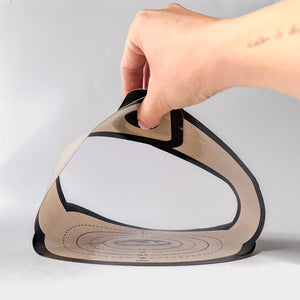
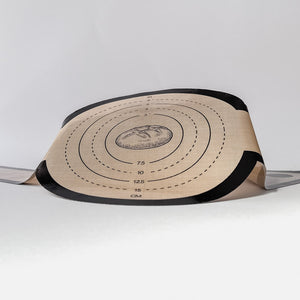
You stretch the dough on the counter, spread an enormous layer of curd... and then comes the moment you try to move the whole thing, the dough tears, the filling falls out, and your blood starts to boil. With our recipe, you’ll avoid this! We shape the dough directly on our non-stick Teflon baking sheet (if you don’t have one, parchment paper will save you). Then you just apply the filling and, with a smile on your lips, slide the sheet with the finished tart onto the tray.
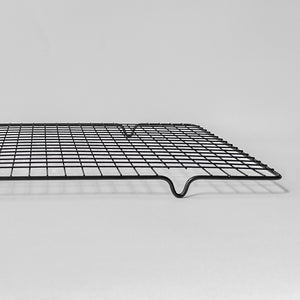
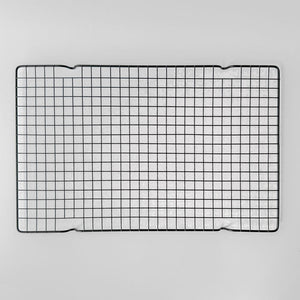
And now for the most important rule! As soon as the frgál is baked, elegantly slide it off the Teflon sheet directly onto our carbon steel cooling rack. Why? First, it allows the tart to cool perfectly from below without getting soggy. Second, it prevents a family "tragedy"! If someone in a fit of hunger decided to impatiently cut into the tart directly on the tray, they would ruin your Teflon sheet. Remember: never, ever cut anything on the Teflon sheet!
Roll up your sleeves, turn on some music that makes you happy, and let's get to baking in peace.

Simple Frgál Recipe
Ingredients for 2 Large Tarts
Take the ingredients out of the fridge in advance so they are at room temperature.
- 250 ml Lukewarm milk
- 25 g Fresh yeast
- 1 tsp Sugar
- 1 tbsp Il Pane flour
- 350 g Il Pane flour (for dough elasticity)
- 150 g Semola Rimacinata flour (for a crispy bottom)
- Pinch of salt
- 60 g Caster sugar + 1 Vanilla sugar
- Grated Lemon zest from 1/2 organic lemon
- 2 Egg yolks
- 80 g Softened butter
Ingredients for Curd Filling and Streusel
- Filling: Curd: 500 g full-fat curd (farmer's cheese) in a block (not from a tub, it's too wet!), 1 egg yolk, 80 g powdered sugar, a tablespoon of rum, a handful of raisins. Plum: 250 g plum jam (povidla), 1 tsp cinnamon, a dash of rum if needed.
- Streusel (be generous with it): 100 g coarse flour (or leftover Semolina), 80 g cold butter, 80 g caster sugar.
- For brushing the edges: 1 egg beaten with a tablespoon of milk (or evaporated milk).
- Final touch: Melted butter mixed with a drop of rum to drizzle over the baked tart.

Our dough can support any filling—besides curd, try thick plum jam, poppy seeds, or nuts. It's important that the filling isn't runny and the curd is always the block kind, not from a tub. Bake until golden, but keep an eye on your oven. Every oven has its own personality. Pull the frgály out in time so they remain moist. And if you happen to have any left over, they freeze perfectly and taste like fresh afterwards.
Preparation Procedure: Step by Step
- Starter: Crumble the yeast into the lukewarm milk, add a teaspoon of sugar and a tablespoon of Il Pane flour. We call this step preparing the yeast starter (be careful not to confuse this with "sourdough," which is a mixture of flour and water used for bread). Let it activate for 10–15 minutes in a warm place.
- Kneading: Pour both sifted flours, salt, sugar, and grated zest from 1/2 a lemon into the mixer bowl. Add the yolks and the activated starter. Knead with the hook at a lower speed for 10–12 minutes. Only when the dough is smooth and pulls away from the sides should you add the softened butter in small pieces. You will get a dough as light as a cloud.
- Rising: Cover the dough with a towel and let it rise for about an hour until it doubles in size. In the meantime, prepare the curd filling and the streusel.
- Fillings: Thoroughly mix all the ingredients for the curd filling in a bowl. For the plum filling, you can slightly warm the jam in a pan and mix it with rum and cinnamon. Once cooled, you can spread it on the tart. For the streusel, casually combine the ingredients in a bowl.
- Shaping: Divide the risen dough into two halves. Place a dough ball directly on the Teflon baking sheet. Use your fingers to stretch it into a thin circle (approx. 30 cm) with a slightly higher edge and roll it with a small rolling pin. You can place the second ball in a bowl, cover it with plastic wrap, and put it in the fridge until it’s its turn.
- Filling and Baking: Brush the edges with the beaten egg and apply 1/2 of the curd and plum filling onto the dough right up to the edges—the decoration is entirely up to you. The dough under the filling should be thinner than the layer of fillings themselves. Finally, generously sprinkle the tart with streusel. Bake in an oven preheated to 190 °C (top+bottom heat) for roughly 15–20 minutes.
You have to try this sometime: When brushing the edges with yolk and milk, try swapping the regular milk for evaporated milk (like Tatra). Not sweetened condensed milk! Try brushing your Christmas vánočka or Easter mazanec with it too. The difference will blow your mind. That crunch and deep color of the crust is simply a pure luxury, and the crispiness lasts even until the next day.
Postup
Jak na to krok za krokem
Tipy od Mari
Krásné pečení a ať se po výsledku zapráší.
Mari








Diskuze a hodnocení (2)
Milá Hanko, moc vám děkujeme za komentář a hlavně, že se recept povedl. :-) Kvalitní suroviny včetně mouky jsou opravdu alfa a omega výborného výsledku. ❤️ Tentokrát odepisuje Alenka
Výborné. Narazila jsem na vás na instagramu a už jsem podle vás vyzkoušela mazanec, ten byl naprosto báječný. Zkusila jsem upéct s moukou od vás a musím říct, že jsem nečekala takový rozdíl ve výsledku. 🤓 <3 <3 <3