Baking Alchemy: How to use every gram of sourdough discard
Jan 22, 2026

Let’s be honest. That moment when you have to remove a spoonful while feeding your sourdough starter and throw the rest away. To some, it feels perfectly normal; to others, not at all—and both views are fine. But today, I’d like to give a tip to all those who want to do things differently. Because they feel that sourdough definitely doesn't have to end up in the sink, the trash can, or as chicken feed.
Baking Alchemy: How to use every gram of sourdough discard
First, let's mention that in baking circles, this is known as discard, leftover, residual, or surplus sourdough/starter. It is most commonly known by the name discard. But at Mari Peče, we live by the motto: No flour goes to waste! Not even this "pre-digested" kind.
First, a bit of math. How much flour (and ultimately money) ends up in the sink (or elsewhere)?
I understand everyone who doesn't want to deal with another jar in the fridge and wonder where to put it. But I tell myself: "it's just a little bit of flour." Well, let's see:
-
Winter/Spring/Autumn (9 months): If I feed 2x a day, 15 g of flour per feeding. That’s 30 g of flour daily. In a month, that’s almost a kilo (900 g). Over 9 months, we are at 8.1 kg.
-
Summer (3 months): It's hot, so I feed the starter up to 3x a day. That’s 45 g daily. In a month, 1.35 kg. Over the summer, that’s 4.05 kg.
The bottom line:
In one year, I would throw away an incredible 12.15 kg of flour! To me, that’s a lot of flour that could bake quite a lot of things. And that’s not counting the water and the time I invest in it, even if some consider it next to nothing.
What exactly is "sourdough discard"?
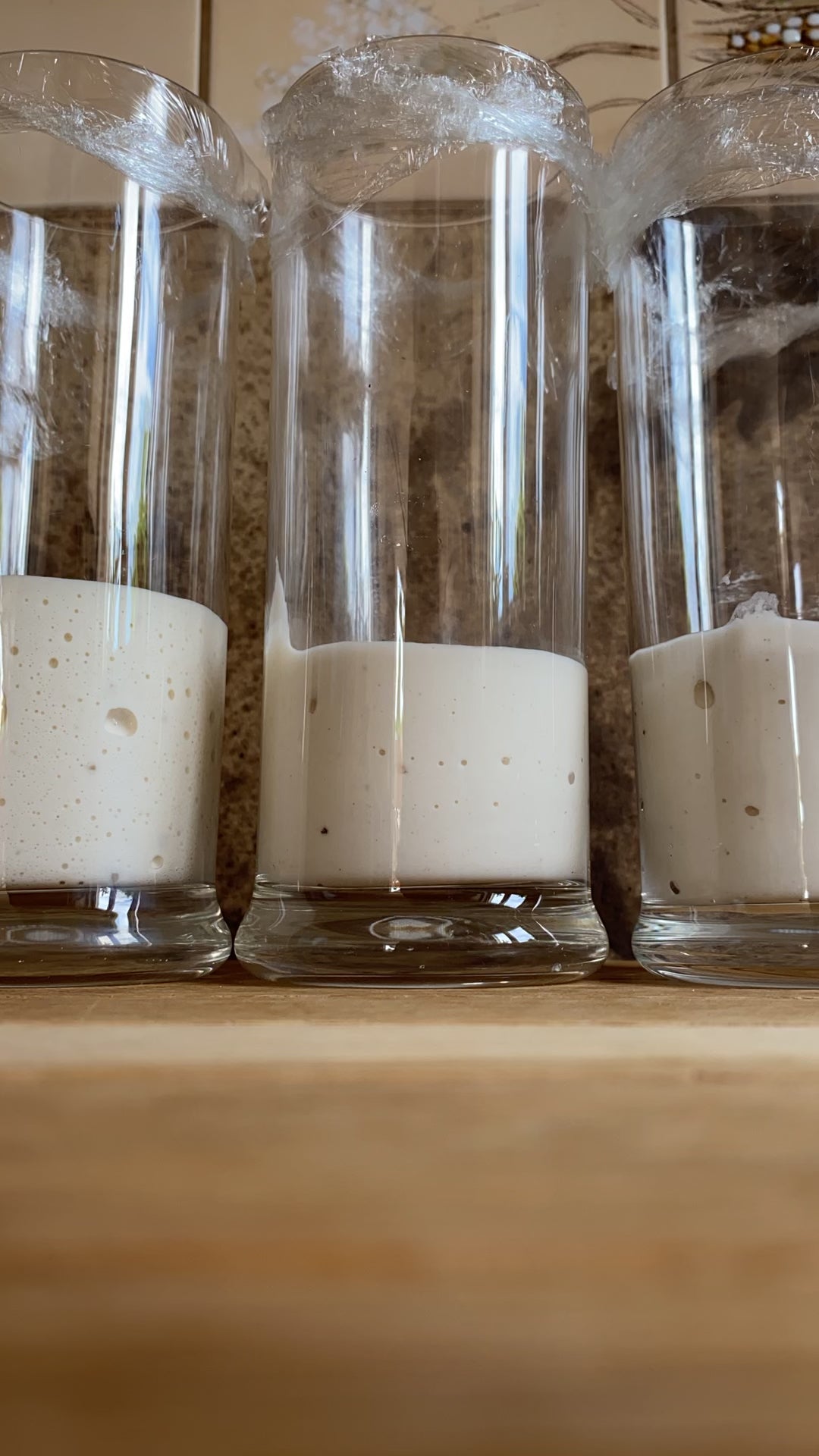
Don't worry, it's nothing to be afraid of. It is simply discard that no longer has the strength to lift a fluffy Easter bread (mazanec) because it has consumed all its food (the sugars in the flour). It is more acidic and thinner, but still full of flavor and probiotics. It’s not ready for a bread marathon anymore, but it's still perfectly usable. As I always say, it’s not the fuel, but it’s just a bit of extra flour and water. Nothing more.
Where should you think twice about this alchemy?
(Discard doesn't belong here!)
Be careful if you want a fluffy loaf where you are painstakingly building gluten structure. If I want the bread to be a real "beauty," I don't use discard here. Why? Because the acidity contained in it could weaken the gluten in the new dough, and the loaf might spread out into a flat disk.
The same applies to sweet baking: I don't put discard into sponge cakes (piškot). A sponge relies on lightness and air bubbles from eggs, and this starter would only unnecessarily weigh it down and make it sour. Avoid using it in any similar desserts based on aeration techniques.
How to manage it then?
Leftover starter doesn't need to be used immediately. Keep a single jar in the fridge dedicated just to these "surpluses." Every time you feed your mother starter, slide the part left over after feeding into this jar. Obviously, we don't feed the entire mother starter, only a small part of it.
Golden rules for storage:
-
Extra jar: Never mix it with fresh starter intended for baking. It deserves its own home.
-
Shelf life: This discard will last a week or even longer in the fridge. For instance, every second day, I add a spoonful of flour, stir, and put it back in the fridge.
-
One-week rule: It's ideal to use up the contents of the jar within a week, wash it, and start over. That’s how I do it, and you can too.
When is it "crossing the line"?
Engage your senses before every use. If the discard is as smooth as water, smells sharp or unpleasant, or has turned grey, don't use it. The result of your baking would be too aggressive.
The soda trick: If the starter is just a bit more sour than you'd like, add a pinch of baking soda (just a tiny bit on the tip of a knife). It neutralizes the acidity and makes the dough foam beautifully. To get the starter out of the jar easily, you can't do without a proper silicone spatula.
Alchemy in savory cooking: Soups and sauces
Using sourdough in soups and sauces isn't very common in our Czech waters yet, and that's a shame! I’ve been doing it for several years. Here is my trick for getting this discard into your cooking:
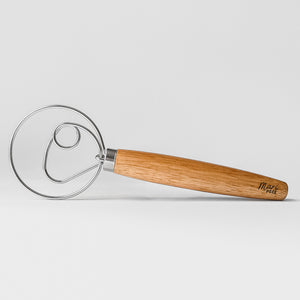
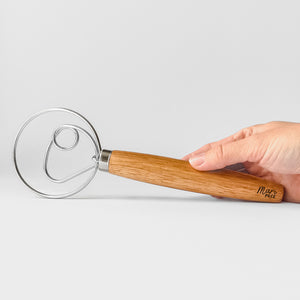
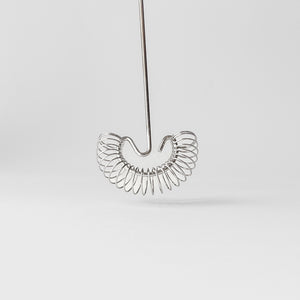
Trick for a smooth texture: Blend 2–3 tablespoons of discard using a whisk into water or, even better, cream. Only then pour this mixture into the soup or sauce. While hot. It thickens it beautifully, gives it a gentle tang, and replaces a classic roux (jíška).


Alchemy in side dishes: pasta, gnocchi, and patties
Think about it here as well. You know your dough and you know what it should look like. To ensure the consistency doesn't change, add discard starter gradually—always just a tablespoon or two, maybe three. Aim for the same thickness and consistency your dough usually has. The result will be more tender and flavorful. I suppose I am a pioneer in this, and I've been using it here very happily for quite some time.
Trick for perfect consistency: For gnocchi dough, homemade noodles, or patties (placičky), first whisk the discard with the egg belonging to the recipe in a bowl using a whisk. This creates a smooth emulsion that incorporates into the flour much more evenly than if you added the starter directly to a dense dough. Plus, it helps you ensure the dough doesn't get too sticky. Two tablespoons of this discard starter are enough here as well.
Alchemy in desserts: sweet baking
Discard starter loves sugar and fat. In recipes for sweet loaves like banana bread, muffins, brownies, or cookies, it works as a great "champion." The flour in it is already sufficiently "pre-digested." The yeast has already done a chunk of the work, breaking down complex structures, making it much easier to digest.
Trick for fluffy sweet baking: If you are adding discard to muffins or a quick bread, first whisk it using a whisk together with the liquid ingredients (oil, melted butter, or milk). This creates a beautifully creamy base that ensures the starter is evenly dispersed in the dough.
Trick for extra crunchy granola: Use a spatula to mix the discard with honey and fat before combining it with the oats. This creates the best crunchy clusters.
Trick for perfect cookies: To ensure your cookies don't turn out tough or "cakey" after adding discard, first whisk the starter with softened butter and sugar into a fluffy foam using a whisk. Only then add the dry ingredients. The starter in cookies acts as a secret binder—it gives them the best edges that crunch beautifully while the center remains tender.
Add the baking soda last in these recipes.
Thanks to discard starter, the dough stays fresh longer and gains a depth of flavor you'll never get from baking powder alone.
You’ll find plenty of recipes and inspiration on our website. Baking is a joy and a mark of respect for ingredients. Every gram counts! Even the one past its prime.
Happy baking!
Mari