How long to bake Mazanec (Czech Easter Bread)? Tips and tricks
Mar 21, 2026

The Mazanec - typical Czech Easter Bread - smells throughout the whole apartment, the crust is beautifully golden, you take it out of the oven, and after slicing, you find it's still raw in the middle. Or the other way around. You leave it in the oven for an extra ten minutes "just to be sure," and the next day the result crumbles under the knife like a sponge cake. Both situations have the same cause. You don't know exactly how long to bake Mazanec and at what temperature.
The answer isn't just about setting a stopwatch. Mazanec is a rich, heavy dough full of butter and egg yolks. It requires a completely different approach than a classic sourdough bread. If you stick to "hearsay" advice, you might end up with a cracked or underbaked result. In this article, I will give you precise times, temperatures, and two methods to know for sure that your Mazanec is done.
Just starting with home baking? Download our free levain e-book. Even though it's about sourdough, the principles of working with flour and proofing apply universally.
What happens in the oven: Why temperature and time matter so much
As soon as you place the Mazanec in the oven, a chain of reactions starts that determines the final result. The yeast, in a final surge, produces even more carbon dioxide. Water in the dough begins to turn into steam. Both push the crumb (the interior of the pastry) outwards. This rapid expansion is called oven spring (the expansion of the dough in the first minutes of baking).
Meanwhile, the Maillard reaction takes place on the surface (a reaction of sugars with proteins at temperatures above 150 °C, which creates the golden crust and the typical aroma of fresh pastry). This is exactly why we brush the Mazanec with egg yolk and milk. The proteins in the yolk accelerate the reaction, making the crust beautifully shiny.
The problem arises when the temperature is too high. The crust hardens before the inside has a chance to grow, and the Mazanec cracks. Or conversely: a temperature that's too low causes the yeast to work longer, the Mazanec over-proofs, and then collapses. Proper temperature and proper time are therefore an inseparable duo.
How long to bake Mazanec: Time and temperature by size
Forget about convection (fan) mode. Mazanec is a high-fat dough, and the circulating hot air would dry it out. The crust would darken before the center had time to bake through. Always choose top and bottom heat and place the Mazanec on the middle rack so that heat flows evenly from above and below.
| Mazanec Type | Dough Weight | Temperature (Start / Finish) | Baking Time |
| Large loaf (from 500 g flour) | 900–1,000 g | 180 °C / 160 °C | 50–60 minutes |
| 2 medium pieces (optimal size) | 450–500 g / piece | 180 °C / 160 °C | 35–45 minutes |
| Mini Mazanecs (5–8 pcs) | 120 g / piece | 180 °C / 170 °C | 20–25 minutes |
The temperatures in the table are approximate. Every oven bakes differently. Therefore, always verify doneness using one of the methods I describe below.
Why do I recommend two medium pieces instead of one large one? Smaller loaves bake through more evenly, the risk of a raw center is minimal, and the baking time is significantly shorter. If you bake from my homemade Mazanec recipe, one batch of dough yields exactly two medium pieces.
Steaming the oven: The secret to fluffy volume
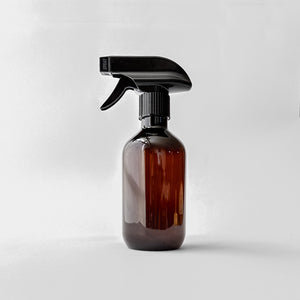
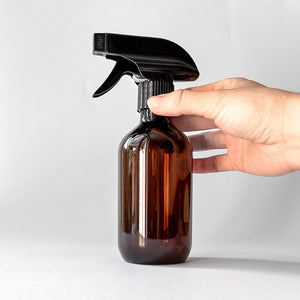
Just like bread, Mazanec loves steam in the first few minutes. As soon as you put it in the oven, use a spray bottle to spray some water onto the oven walls or onto a preheated baking sheet underneath the Mazanec.
Steam keeps the surface of the dough flexible for longer. Thanks to this, the Mazanec springs up beautifully in the oven, and the crust won't crack where it shouldn't. Many people on the internet advise venting the oven after 10 minutes to let the steam out so the crust can start forming. I bake with steam the whole time and see no harm to the result. If you have a steam oven, turn the steam off after 10 minutes. For a regular oven, a bowl of water at the bottom is sufficient.
One important warning: if you have brushed the Mazanec with yolk, always aim the sprayer only at the oven walls, never directly at the dough. Water droplets on a freshly brushed surface will break the integrity of the yolk film, and instead of a mirror-like shine, you'll pull a Mazanec with faded spots and a matte crust out of the oven.
On a baking sheet vs. in a paper mold
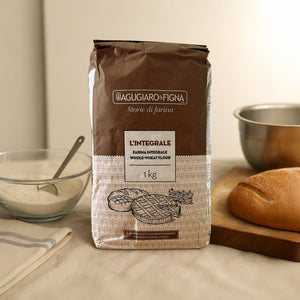
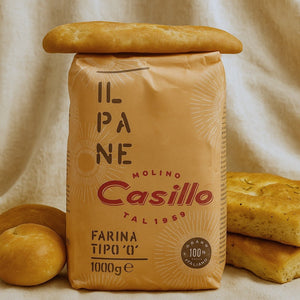
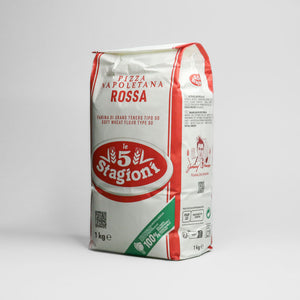
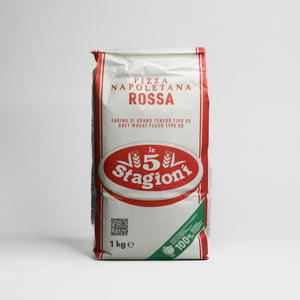
Baking "free-form" requires truly strong flour that holds its shape so the Mazanec doesn't spread into a flat pancake. Our Italian Il Pane flour has a higher protein content and creates stronger gluten (a network of elastic fibers from flour proteins that holds the dough together). The loaf then has a beautiful rustic look and a firm shape. If you're interested in how individual flours differ from each other, I have a separate guide for you.
Paper molds are a great choice for beginners or for very moist and soft doughs. The mold protects the sides of the Mazanec from direct heat, so they stay soft longer, and the Mazanec grows evenly upwards, not outwards. When baking in a mold, add approximately 5 minutes to the time in the table, as the paper acts as an insulator.
If you're not sure if your Mazanec will hold its shape free-form, start with a mold. Further step-by-step instructions can be found in my Mazanec recipe, where I work without a mold thanks to a combination of Il Pane and Farina per Dolci flours.
How to tell if the Mazanec is done
The color of the crust can easily deceive you. The yolk wash browns quickly, making the Mazanec look finished even if the dough is still raw inside. Therefore, there are two reliable methods.
Method 1: The Skewer Test
Insert a wooden skewer into the thickest part of the Mazanec (in the center, as deep as possible). Pull it out and look. If the skewer is completely dry and clean, the Mazanec is done. If dough sticks to it, it needs another 5–10 minutes under foil.
Method 2: Probe Thermometer (Certainty by numbers)
If you want to put the skewer aside and bet on certainty, a digital probe thermometer is your best baking partner. For a Mazanec full of butter, eggs, and sugar, the internal temperature is the key indicator of doneness. The target temperature is 92–95 °C in the center of the loaf.
92–94 °C: The Mazanec is baked through. The crumb is firm but beautifully moist and fluffy. Once the thermometer shows this value, the Mazanec must come out of the oven immediately.
95–98 °C: The Mazanec is baked, but starting to dry out. If you leave it in longer, it will lose its moistness and crumble when sliced.
Below 90 °C: Even if it looks beautiful from the outside, the dough is still raw inside. If you take it out now, the Mazanec will likely collapse, and you'll find an unbaked mass in the middle.

If the Mazanec browns too quickly after 20 minutes, cover it with aluminum foil. This will protect the yolk-brushed surface from darkening while the inside continues to bake. And most importantly: slice only after it has completely cooled. A warm crumb is still fragile and will get squashed under the knife.
Frequently Asked Questions about Baking Mazanec
How long to bake a Mazanec from 500 g of flour?
A large loaf from 500 g of flour (total dough weight around 1 kg) should be baked for 50–60 minutes. Start at 180 °C and after 15 minutes reduce to 160 °C. Verify doneness with a probe thermometer. The target temperature in the center of the loaf is 92–94 °C.
Should I bake Mazanec with the fan (convection) on?
No. Convection dries out the surface of the dough more aggressively than classic top and bottom heat. The crust hardens faster, the Mazanec doesn't have time to grow, and it may crack. Always choose the classic mode and place the Mazanec on the middle rack.
Why is the Mazanec done on the outside but raw inside?
The cause is a temperature that's too high. The crust browns quickly due to the yolk wash and the Maillard reaction, but the inside doesn't have time to heat up. The solution is to lower the temperature after the first 15 minutes and finish baking at 160 °C. If the Mazanec browns too quickly, cover it with foil and finish baking.
How to correctly steam the oven when baking Mazanec?
Use a spray bottle to spray the oven walls (never directly onto the Mazanec brushed with yolk) or put a bowl of hot water at the bottom of the oven. Steam keeps the crust flexible in the first minutes of baking, giving the Mazanec room to grow. You can find more about cracking and its prevention in the article why Mazanec cracks.
Should I slice the Mazanec right after baking?
Definitely not. The warm crumb is still fragile and will get squashed under the knife. Let the Mazanec cool completely on a cooling rack so it can breathe from below as well. Allow at least an hour, or longer for a large loaf.
Thanks to these tips and the right choice of flour, your Mazanec will turn out so well it'll vanish in no time this Easter. Just believe in yourself, trust your oven, and don't rush. And if you want to make baking easier, start right away with our Set for Fluffy Sweet Baking. Both flours in one package. And if you'd like to bake directly with me one day, check out our baking courses in Prague.
May your home be filled with the scent of fresh baking,
warmly, Mari
Read more